
A failed inspection is not an automatic instruction to cancel an order. For an Amazon FBA seller, it is the moment to decide whether the shipment can be corrected, checked again, held, or released with a clearly understood commercial risk.
That decision should not be based only on a pass or fail label. The useful questions are: what was found, how much of the shipment could be affected, whether the supplier can correct it before the delivery deadline, and whether the issue will create an FBA receiving, return, review, or account-risk problem later.
What an inspection finding actually looks like
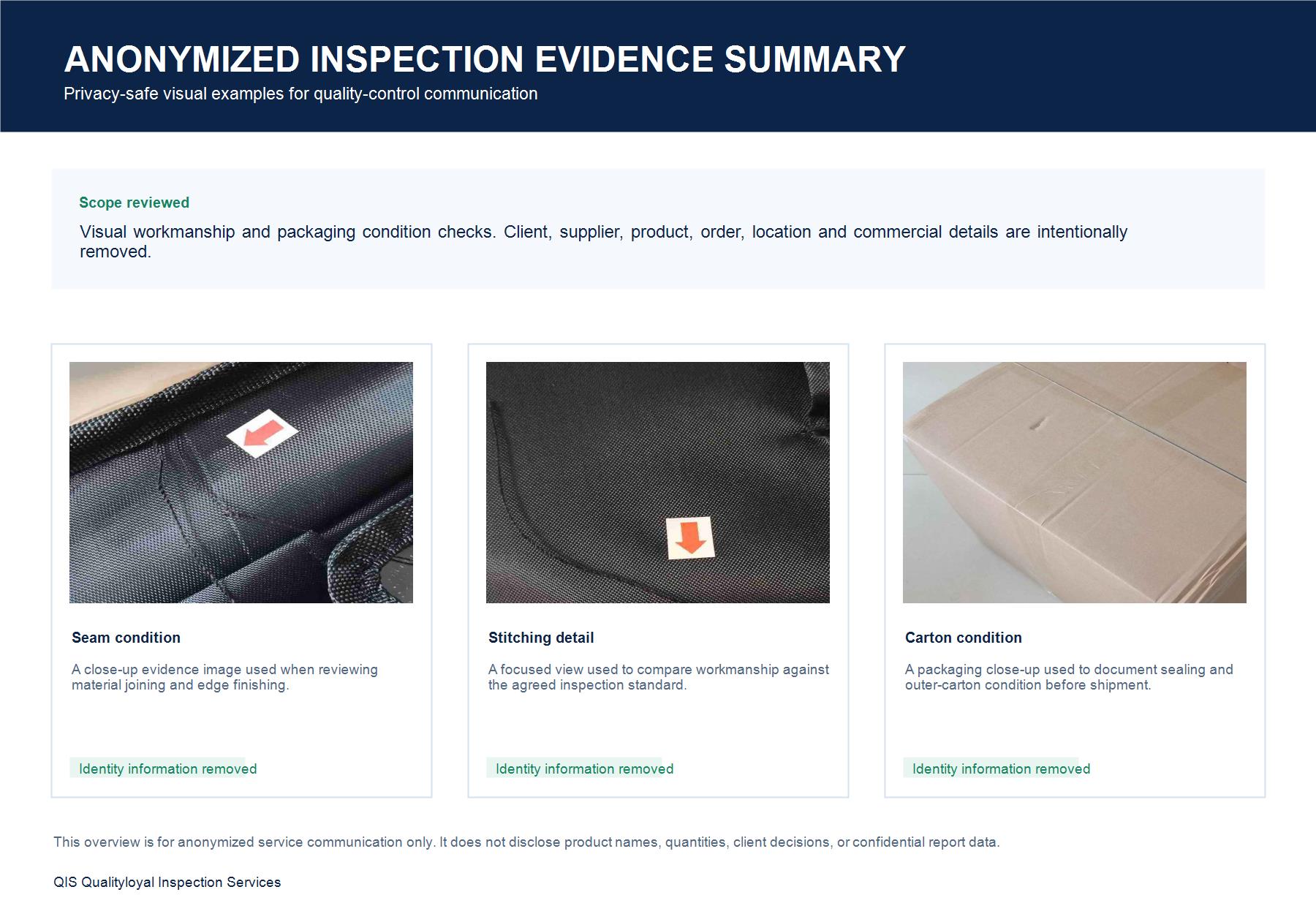
Many decisions are made from small details rather than a dramatic product-wide failure. A seam, a stitching point, a carton edge, or a label can be enough to justify asking the supplier for corrective action. Clear close-up evidence lets the buyer discuss a specific issue instead of arguing from a vague statement.
First, separate the finding from the decision
An inspection report records what was observed against the agreed requirements. The buyer then decides the commercial action. For example, a visual workmanship issue may be suitable for rework and targeted re-inspection, while an FNSKU label, carton marking, prohibited-material, safety, or core-function issue can require a shipment hold.
Before replying to the supplier, ask QIS to clarify four points:
- Is the issue critical, major, or minor under the agreed AQL plan?
- Does it affect product use, Amazon FBA prep, customer safety, or only appearance?
- Can the supplier show completed corrective action with clear evidence?
- What exactly should be checked in a re-inspection: the corrected units, the full lot, or the packaging and labels only?
Three practical paths after a failed PSI
1. Rework, then targeted re-inspection
Use this when the problem is correctable, the supplier accepts responsibility, and the revised scope is defined in writing. Ask for evidence before scheduling the return visit.
2. Hold shipment and negotiate
Use this when the problem can affect FBA receiving, customer safety, product functionality, or a large enough share of the order to change the commercial decision. Do not rely on verbal promises or a replacement sample alone.
3. Release with documented risk
Use this only when the buyer understands the issue, the exposure is acceptable, and the report is retained for the supplier discussion. This is a business decision, not an inspection recommendation.
For Amazon FBA sellers, look beyond the visible defect
A product can look acceptable and still create an FBA problem. When QIS reviews a shipment for an Amazon-bound order, the buyer should also confirm FNSKU readability, carton labels, suffocation warnings where required, polybag condition, quantity, packaging, and carton readiness. A small packaging or label error can become a receiving delay, relabeling cost, return, or negative review after the goods arrive.
Use the report to control the next conversation
The most effective supplier message is not 鈥減lease improve quality.鈥?It identifies the finding, the requested corrective action, the deadline, the evidence required, and the re-inspection scope. This creates a usable record before final payment or freight collection.
For sampling decisions, use the QIS AQL sampling guide and calculator. For the inspection scope, see our pre-shipment inspection service in China.
Send the product, supplier, quantity, finished date, factory city, and Amazon requirements with your booking. QIS will confirm the inspection scope before the visit.
Start an inspection booking