
Your shipment lands, tracking says delivered, and then nothing. The cartons sit in receiving, or check in as stranded inventory: uncounted, unsellable, earning nothing while storage fees tick. Sellers blame the warehouse, a slow truck, or peak-season backlog. In most cases the cause shipped with the goods. A single FNSKU that won’t scan, a leftover manufacturer barcode, a polybag hiding the label — these are factory-floor mistakes. They are also cheap to fix at the source, before cartons are sealed. This is the label chain that stalls receiving, and how to check it in China.
Why FBA receiving delays usually start at the factory
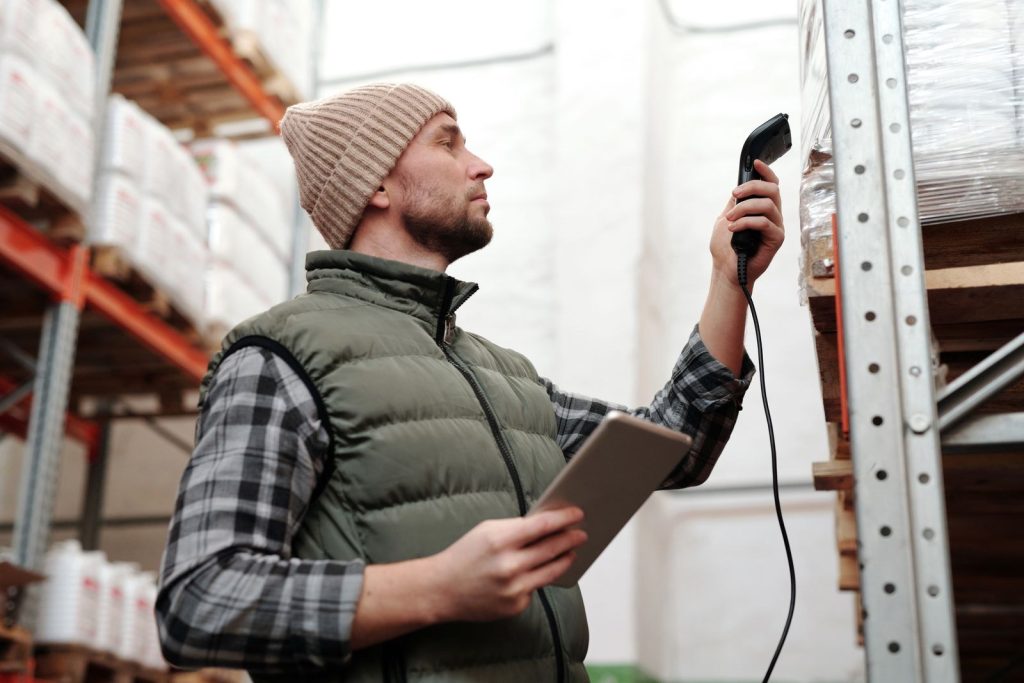
Amazon doesn’t read your labels — machines scan them. At the fulfillment center a scanner points at a unit or carton, and the system either matches it to your shipment or raises an exception. There is no human squinting at a crooked sticker and typing the SKU by hand.
That makes the failure chain short and brutal:
One bad label → receiving exception → delayed check-in → stranded or unsellable inventory.
The label was applied in a Chinese factory weeks earlier, by a worker looking at a print that seemed fine. By the time the exception surfaces, the goods are thousands of kilometres away, and rework means returns, relabels, or disposal. A five-second scan test in China replaces an expensive recovery in the US.
The six label mistakes that stop a shipment scanning
These are the failure modes an inspector checks before goods ship. Each one is invisible on a packing list and obvious the moment you test it with a real scanner.
Wrong or missing FNSKU
FNSKU is unit-level and unique to your listing. It is not the ASIN barcode, and it is not the product’s manufacturer barcode. If the FNSKU is missing, printed for the wrong listing, or the factory used the ASIN instead, Amazon has no way to tie that unit to your inventory. Those units become unfulfillable.
Barcode won’t scan (print, contrast, size, placement)
Print quality, low contrast, a quiet zone too narrow, wrinkles, curvature around a bottle, the wrong symbology, or a glossy laminate that glares under the scanner light — any one can fail. A label can be perfectly readable to your eye and still fail a machine. Scanners want crisp edges, matte contrast, and enough white space around the bars.
Manufacturer barcode left on instead of FNSKU
When you are not using manufacturer barcodes, Amazon expects the FNSKU to be the scannable code. Leftover UPC/EAN stickers underneath create a second code on the unit. The scanner may read the wrong one and log the item against the wrong listing — or reject it entirely.
Label applied to the wrong unit / SKU mix
Mixed SKUs in one carton, or an FNSKU applied to the wrong product, is a labelling error that survives right up to receiving. The system believes the unit is something it isn’t. That mismatch produces stranded inventory and a reconciliation headache you cannot clear from the seller dashboard alone.
Carton (box) label errors
The carton label carries the FBA box ID and shipment details. A wrong carton label, a missing box ID, or placement across a seam or corner means the carton cannot be matched to your shipment. That single carton gets pulled from the flow and held while the rest moves on.
Packaging obscures the scan (polybag and suffocation warning)
Polybags commonly cover the unit’s FNSKU — the label is applied, then bagged over the top. You also need a compliant suffocation warning of the correct size and placement. A missing or non-compliant warning is a separate compliance flag even when the barcode itself scans fine.
How each mistake becomes a receiving delay or stranded inventory
| Mistake | What happens at receiving | Seller impact |
|---|---|---|
| Unscannable barcode | Scan fails, exception raised | Delayed check-in, possible relabel fee |
| Missing or wrong FNSKU | Unit can’t be matched to listing | Stranded / unsellable until relabeled |
| Manufacturer barcode left on | Wrong code read | Mis-scan into wrong listing, reconciliation |
| FNSKU on wrong unit / SKU mix | Inventory miscounts | Stranded units, wrong stock levels |
| Carton label missing / wrong box ID | Carton can’t be matched | Held carton, partial receiving |
| Polybag covers label / warning missing | Scan blocked or compliance flag | Delay plus compliance issue |
The pattern is consistent: the cheaper the label check in China, the more expensive the fix in the warehouse. A mis-scan can be corrected in a minute at the factory and take weeks at the fulfillment center.
Amazon barcode vs FNSKU vs manufacturer barcode — quick clarity
Manufacturer barcode is the UPC or EAN already printed on the product by the brand — you only use it if you have enrolled in the manufacturer barcode programme and commingled inventory is acceptable to you. ASIN barcode identifies the catalog product, not your specific units, and it is not what labels your inventory. FNSKU is the identifier unique to your seller listing; it is what you print and apply per unit when using Amazon barcodes. Short version: the manufacturer barcode goes on the product by the maker, the FNSKU goes on the unit by your seller account, and the ASIN is neither. When in doubt, the FNSKU is the safe default.
What a China factory check catches before shipping
A pre-shipment check for FBA-bound goods verifies the things a receiving exception is built from. An inspector scan-tests a sample with a real scanner instead of eyeballing the label. They confirm the FNSKU matches your PO and listing, check the carton label against your packing list, verify the polybag and suffocation warning, and confirm SKUs are separated correctly by carton.
This work sits inside a combined FBA inspection — an Amazon FBA inspection in China — where label and barcode verification runs within the pre-shipment inspection in China process rather than as a separate fixed service type. The same visit can extend into DUPRO and loading stages, so cartons are verified, counted and prepared for dispatch before they are sealed.
For sampling, the inspector draws units using AQL sampling tables and calculator so the scan test is statistically grounded, not a lucky dip. All of it happens while the goods are still in the factory — where a relabel costs a roll of stickers, not return freight.
A practical pre-shipment label checklist
- Confirm the correct FNSKU file per SKU and per listing before the run starts.
- Scan-test a sample of units with a real scanner, not a phone photo.
- Check print quality: contrast, size, quiet zones, no wrinkles or glare.
- Verify the barcode sits flat and visible, not curving around a shaped product.
- Match every carton label to the packing list and shipment.
- Confirm the FBA box ID is present and clear of seams and corners.
- Check that polybags don’t cover the FNSKU and carry the compliant warning.
- Keep SKUs separated by carton and reconciled against the pick list.
- Photograph the finished labels and carton marks as evidence.
Hand these points to your factory and they cover most of the reasons goods stall. For the wider set of checks around them, use this pre-shipment inspection checklist for Amazon FBA sellers — it covers the full PSI scope this label check plugs into.
When to book the check (timing)
The label and barcode check belongs at pre-shipment, before cartons are sealed and loaded. Once the container is closed, every fix becomes a return. In practice, book it when production is complete and goods are packed but still accessible on the factory floor. DUPRO checks during production and loading supervision at dispatch are adjacent stages that catch issues earlier or confirm them later. The full procedure — from booking through reporting — is on the FBA inspection page linked above; start there when you want the complete stage-by-stage process rather than the label-only view.
FAQ
Why is my FBA shipment stuck in receiving?
Most often a label or carton barcode the scanner can’t match to your shipment. The unit or carton is pulled from the flow for manual handling, which can take days.
Can a bad barcode cause stranded inventory?
Yes. If the code can’t be scanned, or reads the wrong product, units check in as unfulfillable or stranded until they are relabeled.
Does Amazon check FNSKU at the warehouse?
Yes — receiving scans the FNSKU (or manufacturer barcode) to match units to your listing. If it doesn’t match, the shipment hits an exception.
What is a polybag or suffocation warning?
A suffocation warning is the safety notice required on polybags above a certain size. If the bag also covers the FNSKU, it blocks scanning too.
Barcode vs FNSKU — what’s the difference?
The manufacturer barcode is the product’s UPC/EAN; the FNSKU is the identifier unique to your listing, applied per unit.
How early should I inspect?
At pre-shipment, once goods are packed but before cartons are sealed.
What happens if the FNSKU is wrong?
Units can’t be tied to your inventory and become stranded or unsellable until corrected.
What carton label mistakes cause delays?
A wrong carton label, a missing FBA box ID, or placement over a seam or corner.
Booking a label and barcode check
Label and barcode problems are among the cheapest things to catch in China and among the most expensive to discover in receiving. QIS runs quality checks inside Chinese factories — where a problem is still cheap to fix. Plan it into your next production run before the cartons close.
Checks start From $199. Reach us at info@qualityloyal.com · +86-18928019798.