
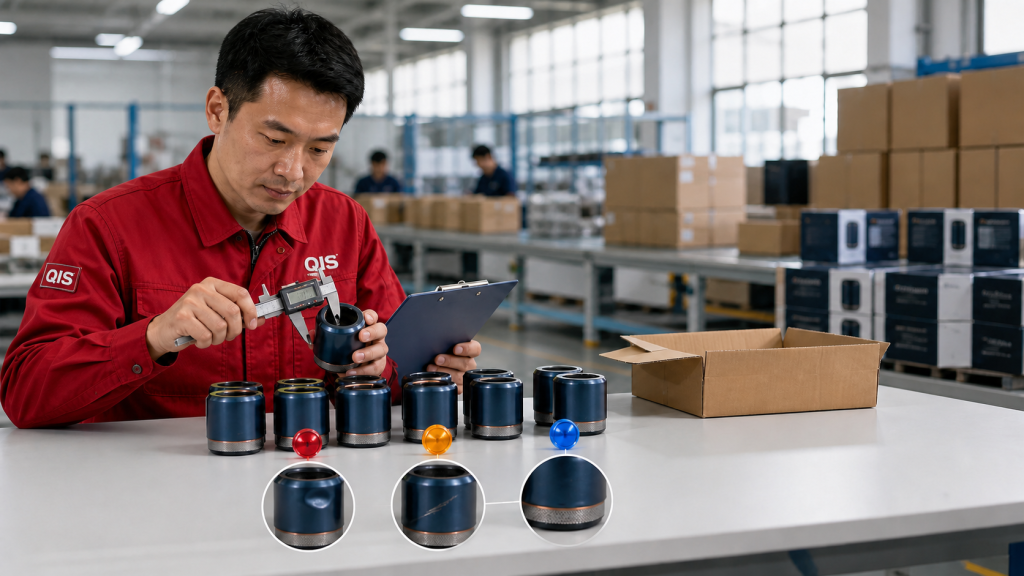
For an Amazon FBA seller, approving a production run without a clear inspection standard can turn a supplier decision into a returns problem. Product photos may look acceptable, the factory may say the order is ready, and the shipment deadline may be close. But none of those signals tells you whether the lot meets a measurable quality threshold.
An AQL inspection for Amazon FBA gives buyers a repeatable way to select a sample, classify defects, and decide whether a shipment should be accepted, rejected, or held for corrective action. This guide explains the practical parts of AQL that sellers should understand before authorizing final payment or shipment.
What AQL inspection means
AQL commonly refers to an acceptance quality limit used in statistical sampling inspection. Instead of checking every unit, an inspector randomly selects a defined number of units from the finished lot. The sample is examined against an approved specification, and the defects are counted by severity.
The result is not a promise that every uninspected unit is perfect. It is a structured lot-acceptance decision based on a sample. This makes the method practical for consumer goods, especially when a full inspection would be too slow or expensive.
For FBA shipments, the inspection should cover both product quality and Amazon-specific preparation requirements. A product can function correctly and still create receiving, listing, or customer-experience problems if the barcode, packaging, quantity, labeling, or carton configuration is wrong.
The four inputs that determine an AQL inspection plan
1. Lot size
The lot size is the number of units presented for inspection. It should represent the completed production quantity, not the quantity the factory expects to finish later. Inspecting too early can produce a sample that does not represent the final shipment.
2. Inspection level
The inspection level determines how large the sample will be relative to the lot. General inspection level II is a common starting point for routine consumer-product inspections, but it is not automatically correct for every order.
A buyer may choose a tighter or larger sample when the product is new, the supplier has a weak history, a previous inspection failed, or the cost of a defect is high. A smaller sample may be appropriate only when the risk is understood and documented.
3. Defect classification
Defects should be defined before the inspection begins. A useful defect list separates issues into three categories:
- Critical defects: safety hazards, regulatory failures, prohibited materials, sharp edges, exposed wiring, or other conditions that can cause serious harm or make the product unlawful to sell.
- Major defects: failures that make the product unusable, materially different from the approved sample or listing, or likely to trigger a return or negative review.
- Minor defects: workmanship or cosmetic issues that do not prevent normal use but fall below the agreed appearance standard.
The same physical issue can be classified differently depending on the product and the promise made to the customer. A color variation may be minor for an industrial component but major for a coordinated consumer set sold as an exact match.
4. Acceptance limits
Each defect class has an acceptance and rejection threshold for the selected sample size. Many buyers set critical defects at zero and use separate limits for major and minor defects. The correct limits should reflect product risk, supplier performance, customer expectations, and any contractual requirements.
AQL values should not be copied blindly from another product. A low-risk decorative item and a child-use electrical product should not share the same quality plan simply because their order quantities are similar.
A practical example for an FBA order
Assume a seller has 3,000 finished units at a factory in China. The inspection plan specifies a recognized sampling standard, general inspection level II, and separate limits for critical, major, and minor defects. The inspector uses the lot size and level to determine the sample size and the corresponding acceptance and rejection numbers.
During the inspection, the selected units are checked for:
- correct model, color, dimensions, materials, and included accessories;
- function tests based on the product specification;
- workmanship and appearance against the approved sample;
- FNSKU or other barcode correctness and scanability;
- unit packaging, warnings, suffocation labels, inserts, and country-of-origin marking;
- carton quantity, dimensions, weight, shipping marks, and packaging strength;
- basic drop, assembly, load, or other on-site tests agreed before inspection.
The report should show the number and type of defects, photographs of each issue, test results, quantity status, and packaging findings. A simple “pass” line is not enough evidence for a shipment-release decision.
Why a passing defect count may still require action
AQL is only one part of a pre-shipment inspection. The overall result may still be unacceptable when:
- production is incomplete, so the lot was not ready for representative sampling;
- a safety or regulatory concern appears, even in one unit;
- the product differs from the signed sample or purchase specification;
- barcode, labeling, packaging, or carton requirements fail;
- a functional test fails across several sampled units;
- the factory prevents random carton or unit selection;
- the defect pattern suggests a systematic process problem.
The buyer should review the defect count together with the inspection conditions and the severity of every finding. A numerical pass should never override a serious safety, compliance, identity, or listing-accuracy problem.
Common mistakes FBA sellers make with AQL
Using a generic checklist
A generic checklist may confirm basic workmanship but miss the exact claims made on the Amazon listing. The inspection criteria should be built from the purchase order, approved sample, packaging artwork, product specification, and listing content.
Leaving defect definitions to the inspection day
If the buyer, supplier, and inspector do not agree on defect severity in advance, disputes are almost guaranteed. Add product-specific examples and photographs to the checklist wherever possible.
Inspecting unfinished production
A small completed portion can hide late-production variation, rework, mixed components, or rushed packaging. Confirm that the required percentage of production is complete and packed before the inspector arrives.
Treating rework as proof of correction
A supplier’s promise to rework the goods is not the same as evidence that the lot now conforms. Depending on the risk, request documented corrective action, targeted verification, or a full re-inspection before release.
Approving shipment from the summary page alone
Review the detailed defect photos, test records, measurements, packaging results, and quantity findings. The report is valuable because it gives evidence—not merely a pass/fail label.
How to prepare a stronger inspection request
Before booking an inspection, provide the inspection company with:
- the purchase order and confirmed production quantity;
- product specifications and tolerance limits;
- photos or a reference to the approved sample;
- a product-specific defect classification list;
- function, safety, assembly, and packaging tests to perform;
- Amazon barcode, labeling, prep, and carton requirements;
- the chosen sampling level and acceptance limits;
- clear instructions for reporting and shipment release.
It is also useful to review carton checks before an FBA shipment and the evidence required before releasing a finished order. These checks complement the sampled defect count and help prevent packaging or specification issues from reaching Amazon.
What to do after receiving the report
Use a simple decision process:
- Accept: the results meet the agreed criteria, production is complete, and no material non-AQL issue is open.
- Hold: the findings require clarification, evidence, sorting, or corrective action before shipment.
- Reject and re-inspect: the lot exceeds the limits or has serious safety, function, identity, packaging, or compliance failures.
Document the decision and connect it to payment and shipping instructions. This prevents the factory or freight forwarder from treating a completed inspection as automatic shipment approval.
Final takeaway
AQL gives Amazon FBA sellers a consistent framework for evaluating a production lot, but the value comes from the details: a representative sample, clear defect definitions, appropriate limits, product-specific tests, and evidence-based review.
If you are sourcing from China, QIS can help prepare and perform a pre-shipment inspection aligned with your product specifications and Amazon FBA requirements. Contact QIS to discuss an inspection plan before your supplier requests final payment or shipment approval.