
Before the line starts, lock a dated, identifiable physical sample against the order. Write a version and a date on it, photograph it, and have both sides sign. Keep one physical piece at the factory and one with you. If you only say “make it like the sample,” a later visit is comparing production to whatever happens to be on the desk that day. A during-production check and a pre-shipment inspection both need a reference that does not move.
What this sample is called, and what you are locking
Factories and buyers often use approved sample, golden sample, signed sample, and master sample for the same object, and sometimes for different ones. Those names are mixed in ordinary industry usage. This article uses a working definition, not a legal term from a standard: a dated, identifiable physical reference that both sides agree is the basis for the lot.
A development prototype is not automatically that reference. A signed sheet of paper, by itself, is not enough. The factory audit checklist we use before a deposit already puts the practical point in one line: keep a signed golden sample with the factory and a duplicate with you. Both of those should be physical pieces, carrying the same version, date, and photographs. Here is how to lock that pair so later inspections can actually use it.
What to record when you lock it
Write these fields down and keep them with both physical pieces. Adjust the list for your product, but do not drop the core rows.
| Field | Why it matters | How to capture it |
|---|---|---|
| Version / number | You need to know which build the sample belongs to if the factory later changes a model string or an internal SKU. | Print the string on a tag attached to each physical piece, and write it in the inspection specification and on the booking form. |
| Date of approval | Lets you see how long this reference has been in use, and whether an older piece is still the current one. | Write the date on the tag and in the specification, in YYYY-MM-DD. |
| Who signed | Shows that both the factory and the buyer have seen the same physical pieces. A signature records that the pieces were shown and accepted. It does not, by itself, win a later dispute. | Have both parties sign an acknowledgment that names the version, the date, and the photo set. Attach a copy of that acknowledgment to each physical piece, and keep a file copy with each side. |
| Photos: whole item, details, packaging, and accessories | Later comparisons fail when the only photos are a front beauty shot. You need the whole item, close details (finish, markings, fit, stitching), the packaging it will ship in, and the accessories that travel with the lot. | Photograph all four scopes under consistent light and background. Store the set in a shared folder named with the version and date, and point the specification at that folder. |
| Color and surface | Color can shift and surfaces pick up wear. If the approved piece is not pristine, that condition has to be visible in the record. | Write the color code and surface condition in the specification. Include photos that show any wear you are accepting. |
| Materials and dimensions | Small material substitutions and dimensional drift show up against a baseline, not against memory. | Record the material callout and the key dimensions in the specification. Photograph any material marks or labels on the piece. |
| Factory piece and buyer piece | Both sides keep a physical sample. A document pack on the buyer side is not a substitute for the object. Each piece should carry the same version, date, photo set, and signatures. | Bag or seal each piece, attach the tagged record, and store the factory piece where production can reach it without an unofficial swap. Keep the buyer piece under the buyer’s control. |
| Whether a replacement is allowed | If a new version appears, you need a written rule for what happens to the current pieces. | State the rule in the specification. If a replacement is allowed, the new pieces must be approved and signed again, and the old pieces must be archived. If a replacement is not allowed, these pieces stay locked until the lot ships. |
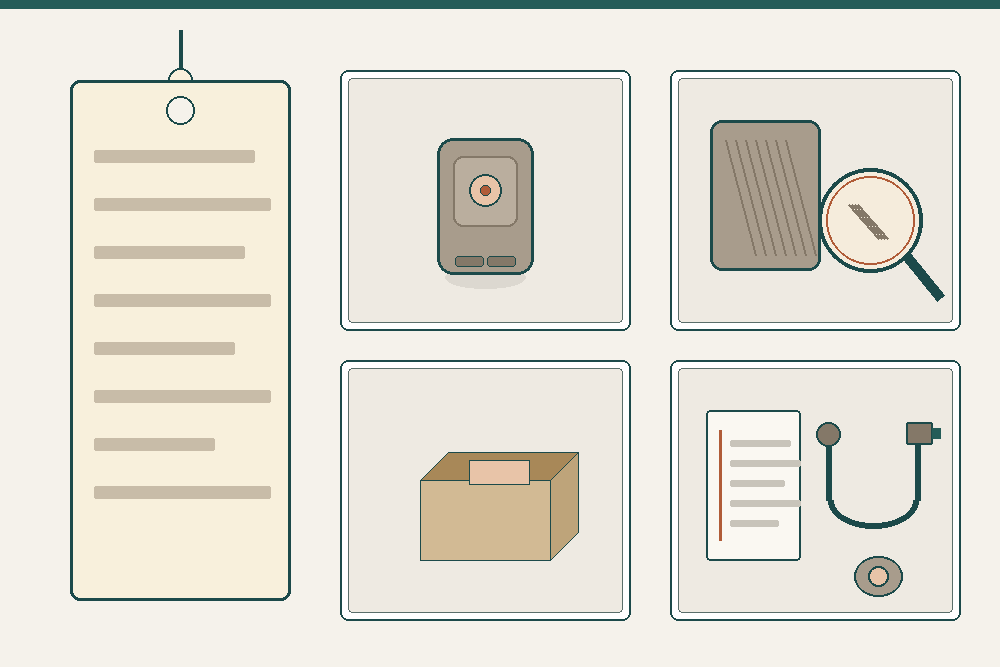
The four photo scopes do different jobs. A whole-item shot shows silhouette, proportions, and color. Detail shots catch finish, markings, fit, and stitching that a front shot hides. Packaging shots should include the inner pack and any inserts that will ship with the lot, not only the outer carton art. Accessories belong in the same set: chargers, spare parts, manuals, fasteners, anything the customer is supposed to receive. If an accessory is missing from the approved pieces, it is hard to argue later that the factory was supposed to include it.
The factory piece has to be findable on a later visit. Put it in a sealed bag or a marked box, keep the tag on the outside, and store it in a named place. An unsigned spare on the same shelf, with no tag, is how a “new official sample” appears on the morning of an inspection. The buyer piece is a second physical object, not a folder of scans. Photos and the signed sheet travel with it; they do not replace it.
When the factory wants to change the sample
Factories often ask to replace the approved sample after they say they have improved a component, switched a supplier, or cut a new version. Do not let the desk copy be swapped without a new approval. A new sample has to go through the same steps: the same fields, a new date, a new photo set, and fresh signatures. Archive the old pieces so the history is still available. Do not destroy them, and do not leave two current approved samples in play at once.
If the factory says the new piece is the same as the last one, compare the two side by side against the version string, the date, and the photographs. If they will not put the old and new pieces on the table together, treat the new one as not approved.
Archiving is a labeling job. Mark the old pieces as replaced, keep their date and photo set, and store them away from the current approved pair. If the old and new pieces share an unmarked bin, you are back to a moving target.
The inspection specification should say whether replacement is allowed and under what conditions. If it is not allowed, the factory should keep producing the locked version until the lot ships. If they cannot, you decide whether to hold the lot, rework, or stop the order while the goods are still in the plant.
How the locked sample is used on later visits
The locked pieces get used in two later visits, which other pages already cover in detail.
During production, a during-production inspection can compare units on the line with the locked factory piece and the photo set, while there is still time to correct the line. For when that visit should happen, use the timing guide in when to book a during-production inspection in China.
Before shipment, a pre-shipment inspection uses the same reference against packed units. The Yiwu notes on checking material before a shipment is released show how that comparison looks on a real floor, with the reference already on the table. This article does not retell that visit. Both visits compare against the locked sample, not against an unsigned spare that appeared that morning.
What to attach when you book an inspection
When you book an inspection, attach the locked-sample record:
- Version / number
- Approval date
- The photo set covering the whole item, details, packaging, and accessories
- Who signed, and the date they signed
- Where the factory piece and the buyer piece are kept
- Whether replacement is allowed, and if a later sample has already been approved and archived
That packet tells the inspector which physical reference to ask for, and it makes it harder for the floor to present a different piece as the approved one. When the inspector arrives, they should ask for the tagged factory piece by version and date, then compare line units or packed units to that object and to the photo set. If the factory hands over an untagged unit from the line and calls it the sample, that is not the locked reference.
If the production units do not match
If units on the line or in the packed lot do not match the locked sample, hold the goods first. Do not ship or pass the lot while you are still figuring out the drift. The choices after that, such as hold, rework, re-inspect, or reject, are set out in what to do when an inspection fails. Make the decision while the goods are still in the plant. Once the cartons are on a vessel or in a fulfilment centre, you are no longer deciding on the factory floor.
If a lot is about to leave China
Send the version string, the approval date, and the photo set of the approved sample. We will tell you what a practical inspection looks like for that lot and how much of it fits in one visit. Book an inspection with those details. If you would rather write first, you can also use the contact page.
If you are still choosing a supplier, a factory audit is where you find out whether the company can hold and use a locked sample. If you are shipping to Amazon, label, packing, and carton work sit alongside the product check in our FBA inspection work in China. The AQL sampling page explains how sample size and accept numbers are set for the visit.